

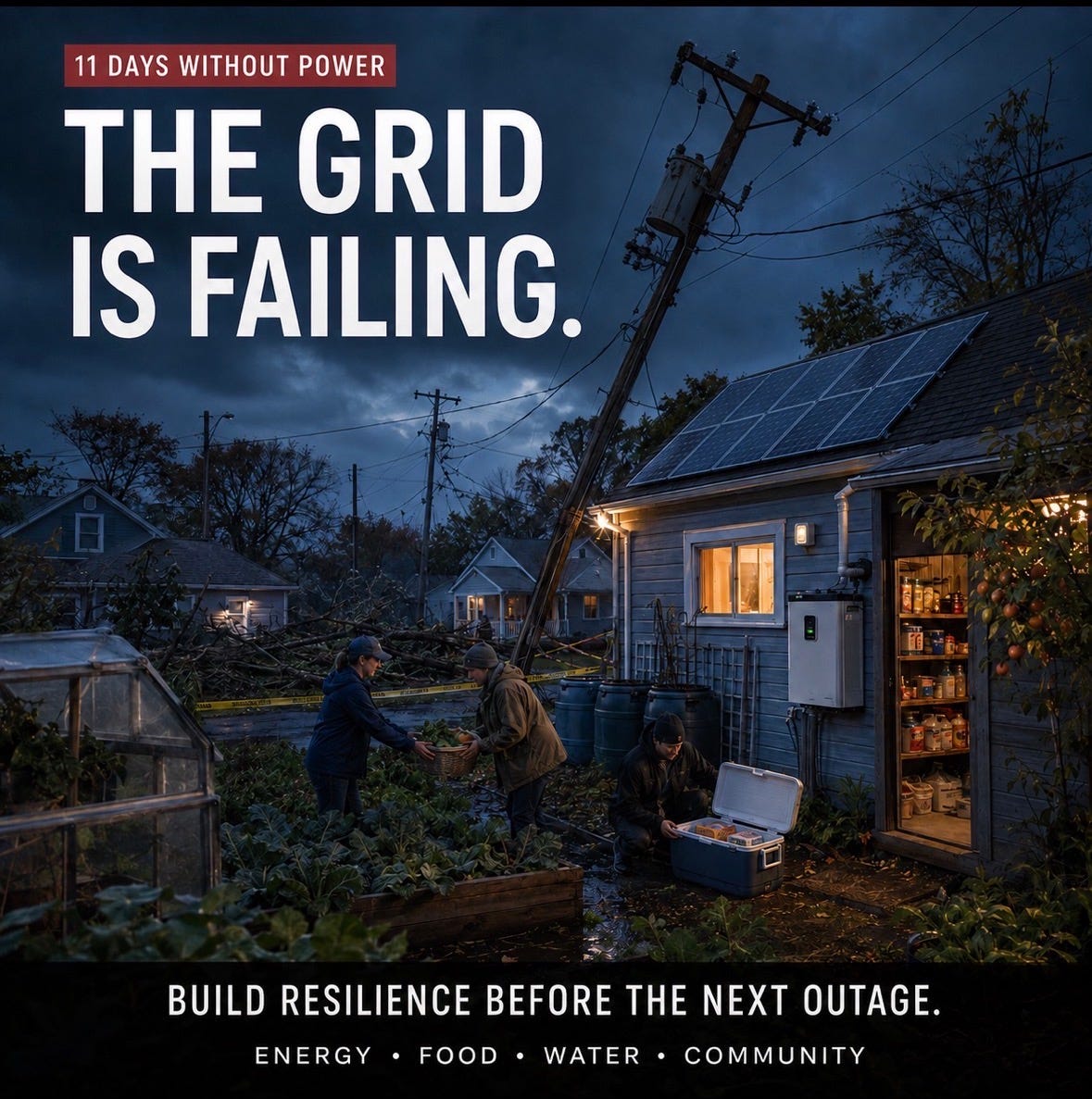
Almost eleven days without power, and this isn’t simply the result of storm damage. It’s the predictable outcome of neglected infrastructure, poor planning, and a utility monopoly that’s been allowed to put profit ahead of the people it serves for decades.
Northern Indiana is facing an extraordinary outage. The storms beginning August 11 caused historic damage across the NIPSCO system, with roughly 370,000 total outages reported and more than 72,000 customers still without service on August 20. NIPSCO now expects some communities, including Gary and Portage, to remain without electricity until August 25, but there’s little evidence, based on how restoration has been handled so far, that this will actually happen. Some residents could face nearly two weeks in the dark, and in all likelihood, the outage could stretch into September.
As a former Floridian, I’ve lived through tropical storms and hurricanes. I know what widespread storm damage looks like. In places that regularly face extreme weather, crews mobilize quickly, systems are built with those risks in mind, and power is typically restored within hours or a few days, not nearly two weeks later, with the exception of catastrophic hurricanes. The difference isn’t that Florida never has failures. It’s that its infrastructure, emergency planning, and utility competition create more pressure to respond.
Here, NIPSCO holds a monopoly over an essential resource. Customers don’t get to choose another provider when service fails. They’re simply expected to wait, accept vague explanations, and watch restoration estimates get pushed back again and again. Meanwhile, power is reportedly going down again only hours after it has been restored in some areas. That isn’t a recovery. It’s evidence of a deeper failure in the grid itself.
There’s only so long officials and utility representatives can blame “storm damage” before people have to ask harder questions. What equipment was maintained? What was sold off? What upgrades were delayed? Where did the money go? Why is a multibillion dollar utility unable to provide dependable service for nearly two weeks during a declared state of emergency?
People are being told restoration is coming, only to have the goalposts moved once again. Families are losing food, medicine, income, sleep, access to refrigeration, communication, and basic safety. People are forced to spend money they may not have on ice, fuel, hotel rooms, restaurant meals, generators, and replacement groceries. For elderly people, disabled people, parents with children, and anyone dependent on electrically powered medical equipment, this isn’t merely inconvenient. It’s dangerous.
This is why self-sufficiency matters, not as an individualistic fantasy, but as a practical response to systems that have shown they can’t be trusted to protect the public. If you’re able, invest in ways to reduce your dependence on a fragile centralized grid: solar panels, battery backups, generators where appropriate, water storage and filtration, shelf stable food, gardens, community food networks, and mutual aid relationships with neighbors.
Growing some of your own food won’t fix a collapsed electrical grid, but it does create a measure of security when supply chains fail, stores are closed, refrigeration is lost, or prices surge during emergencies. Knowing your neighbors, sharing resources, checking on vulnerable people, and building local networks can matter just as much as owning equipment.
The lesson of this outage isn’t that ordinary people have failed to prepare. It’s that we’ve been made dangerously dependent on aging public infrastructure controlled by private monopolies whose priorities were shaped around quarterly profits long before this emergency began.
When an essential service is centralized, monopolized, under-maintained, and shielded from meaningful accountability, the public pays for its failure, sometimes for days, and sometimes for weeks. This outage should be a warning. Don’t wait for the next failure to start building resilience for yourself, household, and community.
The candle flame gutters. Its little pool of light trembles. Darkness gathers. The demons begin to stir. - Carl Sagan
This is how NIPSCO will avoid accountability. Customers will be digging themselves out of this mess for MONTHS, and some families, sadly, may never be able to have power restored at all. This is outrageous. The people of Gary, Indiana especially are going to need all the assistance they can get. 👇
NIPSCO release:
“Weatherhead repairs may be needed before power can be restored to your home.
The weatherhead is the metal cap and service entrance equipment located where NIPSCO electric service wires connect to your home.
If the weatherhead is damaged during a storm, it is the customer’s responsibility to have it repaired by a licensed electrician before NIPSCO can safely reconnect your service. Customers should never attempt to repair a broken weatherhead themselves.
Once repairs are complete, we will make every effort to restore power as soon as possible.
For more information, visit: https://ow.ly/HoZU50ZBBbC”