

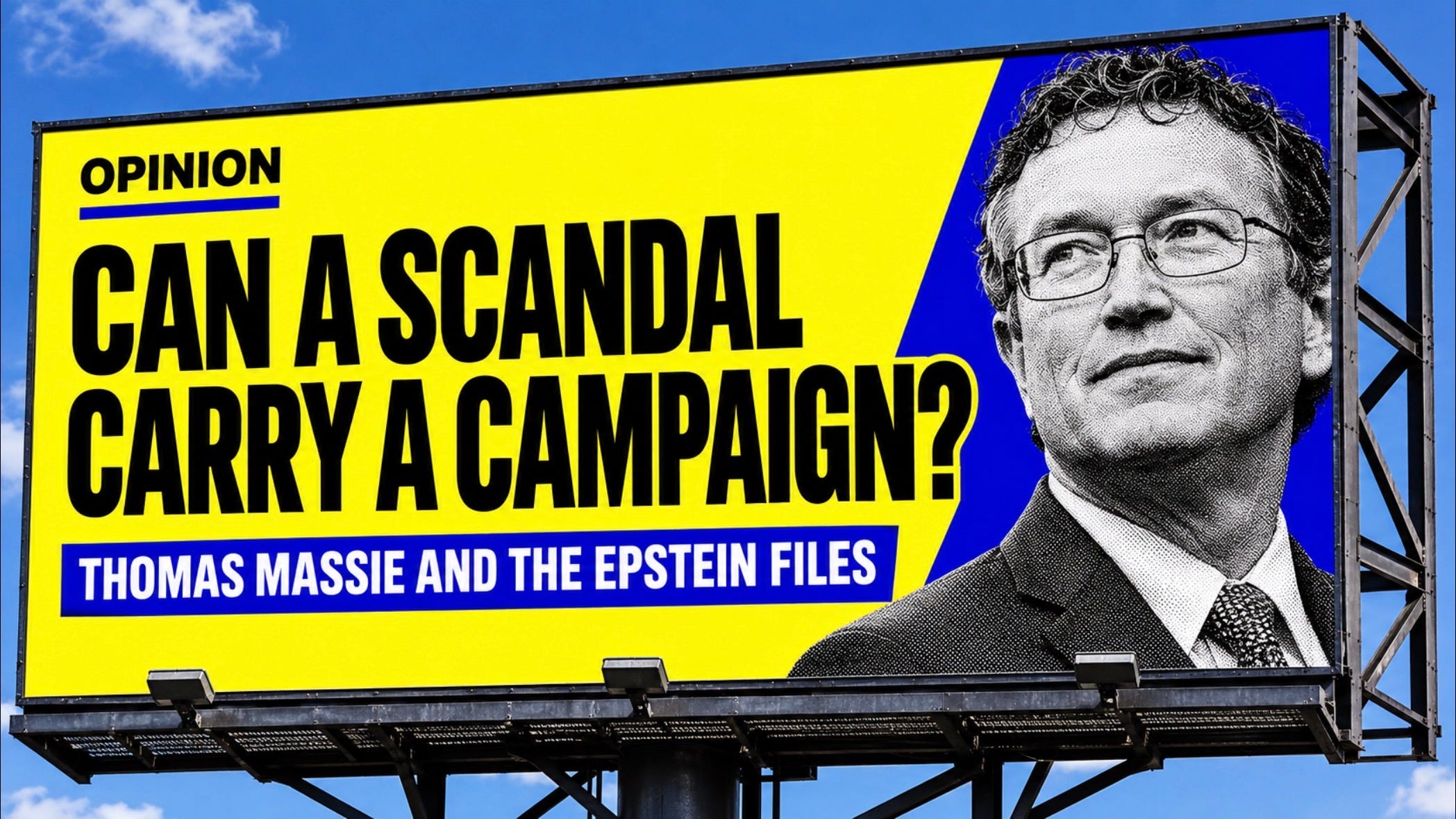
A political campaign can look substantial while offering little more than a carefully managed identity. The candidate becomes the face of a product: the independent thinker, the principled dissenter, the outsider willing to confront what everyone else fears. Strategists supply the language, select the conflicts, and shape the presentation. The public sees conviction. What deserves closer examination is whether that conviction leads to a program capable of changing the conditions the candidate condemns.
Thomas Massie’s emphasis on the Epstein files provides a revealing test of that distinction. Demanding disclosure sounds courageous, particularly when powerful people resist it. But disclosure alone isn’t an anti-trafficking strategy. There’s an enormous difference between obtaining documents that could embarrass politicians and developing a sustained effort to identify active perpetrators, protect vulnerable people, and dismantle the structures that allow exploitation to continue. The first can generate a political identity. The second requires an operational agenda.
The criticism isn’t that the files should remain secret. It’s that releasing them must serve something beyond the next confrontation. If Massie wants his advocacy understood as a serious response to trafficking, the central question is what he intends to build around it. Where’s the equally prominent demand to identify ongoing networks? What institutional changes would prevent another powerful offender from receiving protection? How many more Epsteins are there that the existing system enables? What would success look like for people who might otherwise become victims?
Without clear answers, the cause risks becoming an indefinitely renewable source of political attention. Every withheld document supplies another confrontation. Every confrontation supplies another interview, fundraising appeal, or declaration that the establishment’s afraid. Even an incomplete disclosure can sustain the narrative by suggesting that the decisive revelation remains just beyond reach. A campaign can continue drawing energy from the promise of exposure without ever explaining how exposure becomes prevention.
That’s why the difference between accountability and political revenge matters. Accountability follows evidence regardless of whose reputation suffers. Political revenge selects its targets first and measures success by the damage inflicted on them. When the public presentation emphasizes which politicians might be implicated more than how exploitation can be stopped, it invites the suspicion that victims have become the moral justification for a struggle whose real currency is political advantage.
Examining why Epstein received lenient treatment can certainly contribute to understanding institutional failure. But that inquiry becomes shallow when it remains centered on scandal rather than reform. The consequential question isn’t merely why one offender escaped adequate punishment. It’s which decisions, relationships, incentives, and failures made that possible, and whether comparable arrangements continue to protect others. An investigation that never moves from the notorious individual to the enabling system leaves its most important work unfinished.
The same standard applies to questions about intelligence agencies and the abuse of secrecy. Where there’s evidence that public authority initiated and shielded exploitation or obstructed accountability, the response should be specific investigation and enforceable oversight. Simply surrounding a scandal with suggestions of hidden power doesn’t dismantle that power. Secrecy must be challenged through identifiable demands: what records are sought, which decisions require examination, who exercised authority, and what safeguards would prevent its abuse. Otherwise, even suspicion of institutional wrongdoing can become another ingredient in a campaign’s atmosphere rather than a problem it’s equipped to solve.
I personally have concerns that Massie’s relationship to the Ron Paul campaign tradition belongs within this larger examination of political packaging. This critique from a former supporter is that familiar personnel, marketing methods, language, and presentation can be repurposed to introduce a new candidate as an authentic expression of an established movement. In this light, the resemblance isn’t merely ideological. It’s a recognizable political product being presented through a different spokesman.
That interpretation doesn’t require the claim that every belief a candidate expresses is insincere. A person can hold genuine convictions and still function as a brand ambassador for a strategy developed around him. The problem arises when the audience mistakes familiarity for independence and a coherent presentation for a comprehensive governing agenda. Recognizable principles can create an impression of depth that the actual proposals haven’t earned.
A prospective presidential campaign makes this especially important. A signature controversy can supply everything a national candidacy needs at the level of storytelling: enemies, conflict, moral urgency, and a reason to ask supporters for money. But a compelling origin story isn’t a governing program. Donors shouldn’t have to spend years financing the promise of a reckoning without being told how that reckoning will reduce exploitation or strengthen accountability.
The proper measure isn’t how effectively Massie makes powerful people uncomfortable. It’s whether his advocacy establishes a credible path from records to investigations, from investigations to consequences, and from consequences to prevention. If the public-facing campaign remains concentrated on disclosure and political confrontation while that path stays indistinct, the imbalance deserves scrutiny.
The deepest failure of political branding is that it turns suffering into scenery. Victims provide urgency, secrecy provides suspense, and the candidate occupies the center as the person promising to reveal the truth. A substantive campaign would reverse that arrangement. The candidate’s prominence would be incidental, and preventing exploitation would determine the priorities.
That’s the challenge Massie’s Epstein advocacy must answer. Not simply whether he can obtain the files, dominate the argument, or build a national following, but whether the cause extends beyond the political usefulness of the scandal. If the machinery of campaigning is more developed than the machinery of prevention, the appearance of substance is doing work that substance itself hasn’t yet done.
#PoliceCorruption #SexTrafficking #GovernmentCorruption #EpsteinFiles #ThomasMassie #RonPaul #ActivistCults #PrivateSecurityCorruption #ManchurianCandidate #Libertarian #PsychologicalOperations #IntelligenceAgencyCorruption